
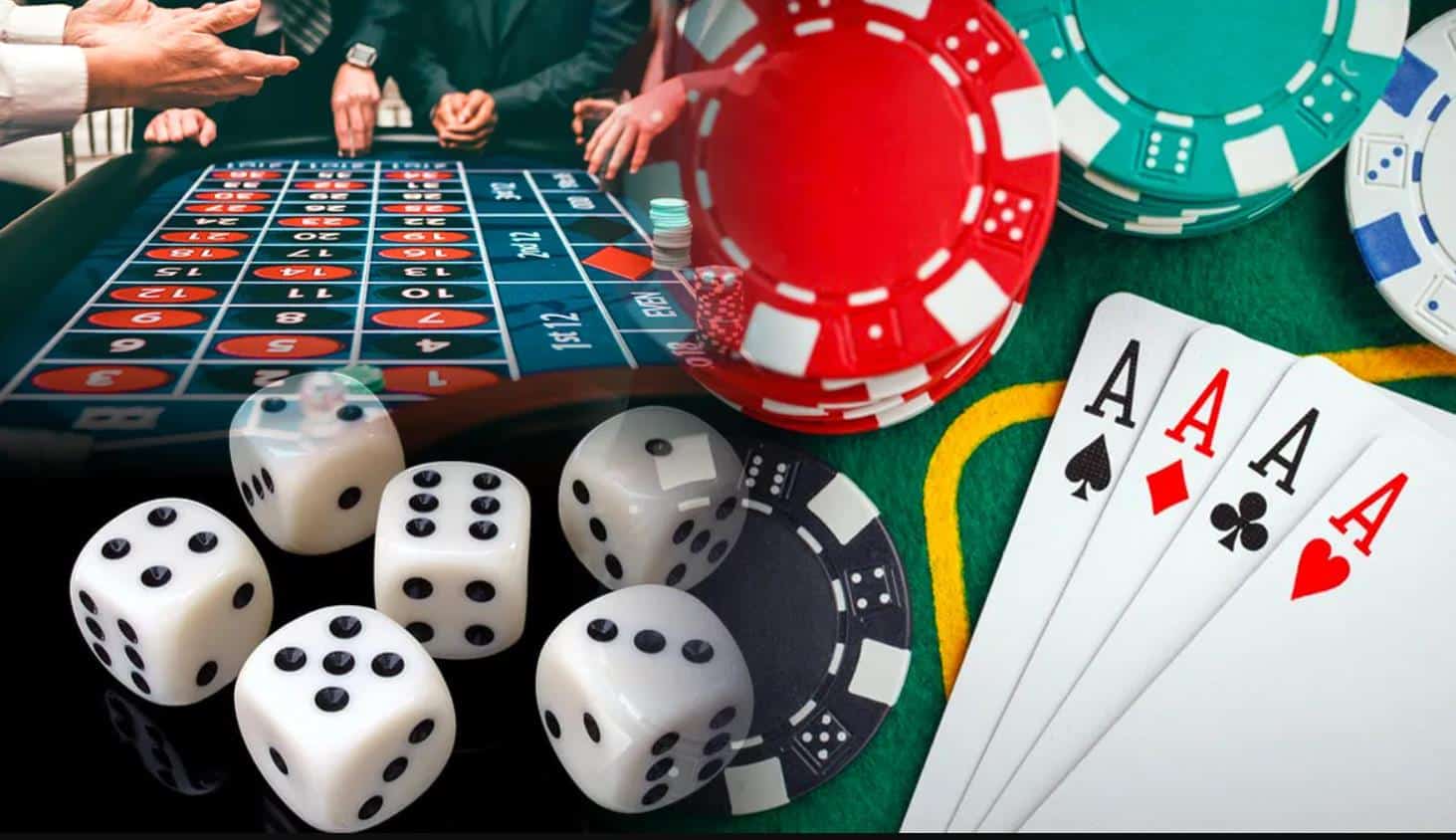
Every time I log into 21casino free online slots and look through the lobby, I maintain one number in the rear of my mind: the house edge. It’s the quiet partner in every spin, every card dealt, and every dice roll. A lot of players think of it as some dubious casino trick, but it’s not. It’s a mathematically predictable percentage that indicates how much the game is intended to retain over the long run. At 21 Casino, where the name itself references the classic game of blackjack with the minimum possible advantage, understanding this concept can entirely change how you choose your games. I see too many people go after huge progressive jackpots without recognizing that the edge eats into their bankroll faster than they think, while others grind low-edge table games without ever knowing why their money endures longer. This article will explain the house edge in plain language, examine how it shapes every part of the 21 Casino experience, and provide you the practical lens I use to evaluate whether a game is worthy of my time.
What Is the House Edge and How Do You Calculate It
The house edge is the inherent advantage the casino maintains in any game, expressed as a percentage of each wager that the house expects to keep over millions of rounds. I always describe it as the cost of fun, not a hidden fee. For example, if a slot has a house edge of 4%, that means for every €100 wagered in total across all players, the casino expects to retain about €4 as gross profit while returning €96 in wins. This is not deducted from your individual bet; it arises from the gap between the true odds of winning and the payout odds the game offers. In European roulette, a straight-up bet pays 35:1, but the true odds of hitting a single number are 1 in 37 because of the single zero, creating a built‑in edge of 2.70%. I calculate it simply: divide the number of losing outcomes by total outcomes and adjust for the payout. That fractional difference may look tiny, but it compounds relentlessly over thousands of spins or hands, which is why I always examine the rules before I start playing.
At 21 Casino, the mechanics behind the edge are no different from anywhere else, but the importance of recognising them grows when bonuses and wagering requirements are involved. Most games contribute differently towards clearing a bonus, precisely because the house edge varies so much. A low‑edge blackjack title might contribute only 10% towards a playthrough requirement, while a high‑edge slot contributes 100%. I have seen players fall into the trap of assuming all games are equal, only to lose their bonus funds before they ever reach a withdrawal. The edge is also shaped by side bets. In craps and blackjack, the main bet might carry an edge below 1%, but a tempting side bet like Perfect Pairs can push the house advantage well above 5%. I treat those bets as a separate game with its own ruthless mathematics, never as a harmless add‑on. Understanding that the edge is baked into the paytable and the rules, not into some imaginary rigging, is the first step towards a smarter session at 21 Casino.
The way House Edge Affects Your Time Across 21 Casino’s Game Lobby

Browsing the 21 Casino lobby with house edge in mind turns a simple scroll into a strategic session. The sheer diversity of titles from providers like NetEnt, Microgaming, and Evolution means the edge can swing from under 0.5% on a perfect‑strategy blackjack hand to over 10% on certain themed scratch cards. I instantly filter games not by popularity but by the underlying mathematics that matches my goal. If I want to relax with a slow bleed, I head to the live dealer baccarat tables where the banker bet carries a house edge of just 1.06% before commission. If I am seeking a quick thrill with the potential of a massive multiplier, I select a high‑volatility slot knowing the edge might sit around 3.5% to 4.5%. 21 Casino makes this practical because the portfolio is tagged by category, allowing me to separate low‑edge table games from the slots and instant‑win section quickly.
What I appreciate most about the lobby is that it does not mask the information I need. Many slots publish their RTP directly in the game rules, and for table games, the rules variations are clearly indicated. At 21 Casino, I can see whether blackjack pays 3:2 or the less favourable 6:5 just by opening the game; that single rule change alone contributes about 1.4% https://www.similarweb.com/website/myfreebingocards.com/competitors/ to the house edge. The sheer scale of the library also means I can locate multiple versions of the same game with different edges. I have seen European roulette with a single zero sitting right next to an American double‑zero variant, and the edge difference is pronounced. I advise any new player to spend five minutes checking paytables and rules before depositing. The lobby’s smooth filters on desktop and mobile alike let me to filter low‑edge games when I am in serious mode, and keep the high‑edge fun titles for when I am playing purely for the spectacle.
Live Casino Games at 21 Casino – Probabilities in Real Time
The live dealer section at 21 Casino, powered by Evolution and other studios, brings the house edge to life in the most transparent way possible. I observe real cards being drawn and real wheels spinning, which erases any lingering doubt about software manipulation. The advantage on the main bets in live baccarat, for instance, sits at 1.06% on the banker bet after the standard 5% commission is deducted, while the player bet carries 1.24%, and the tie bet – which I seldom touch – can exceed 14%. I believe the mathematics equivalent to the digital versions, but the social pace and the decision‑making time often prevent me from rushing into high‑edge side bets. The live game show titles like Crazy Time or Monopoly Live, however, combine a low‑edge base segment with bonus rounds that can carry extremely high volatility and a variable house edge that is less clear. I view these as entertainment products with a cost built in, much like a slot machine with a fancy bonus wheel.
One huge advantage I lean on in live dealer play is the clear deck penetration and the uniform rules. At 21 Casino’s live blackjack tables, I observe the shoe and can confirm the 3:2 payout and the dealer stand rule before I ever place a chip. The house edge here reflects the physical game’s mathematics without any RNG abstraction. I also value the ability to interact with the dealer and other players, which provides me with a rhythm that discourages impulsive side‑bet sprees. The live roulette wheels are regularly inspected for balance, and the results are broadcast without delay, so I am aware the edge is exactly what the wheel configuration dictates. I advise that anyone exploring 21 Casino’s live lobby arrange by rule set, not by dealer personality. A European blackjack table with early surrender and dealer standing on all 17s can bring the house edge below 0.4%, and finding that deal is worth more to me than a charismatic host. The live casino is where the mathematical promise of the game meets genuine oversight, and I find that comforting.
Why the House Edge Matters More Than RTP When Choosing Games
I commonly hear players talk exclusively about return‑to‑player percentages, or RTP, as if it gives the full picture. RTP is simply the counterpart of the house edge: a game with 96% RTP has a 4% house edge. But focusing on RTP alone can be misleading because it suggests you get 96% of your money back each session, which is only true across an enormous number of trials. In a one session of play, short‑term variance prevails, and the edge is what quietly pulls your session result toward the negative over time. At 21 Casino, I always emphasise the edge itself when I seek to maximise my time at the table, because a low edge means less mathematical pressure per round. When I switch to slots, I accept a higher edge in exchange for entertainment value and the possibility of a bonus round, but I never confuse a high RTP announcement with a guarantee of steady returns.
The edge also works with volatility in a way that RTP does not show. Two slots might share 96% RTP, yet one delivers wins in frequent small bursts while the other stays quiet for 200 spins before a major payout. The house edge is unchanged, but the real-world experience feels completely different. My rule of thumb at 21 Casino is to review the help file of each game to see the edge or at least infer it from the RTP disclosures, then decide whether the risk profile fits my mood. For table game enthusiasts, the edge is the most useful piece of data. A European roulette table with a 2.70% edge will deplete a bankroll half as fast as an American wheel with a 5.26% edge, all else being equal. That is the type of tangible, verifiable difference I seek each time I open the live casino tab. Knowing the edge offers me a clear hierarchy: craps, blackjack, baccarat, then roulette, then slots, then the lottery‑style instant wins. I continue to play them all, but I do it with my eyes open.
Black Jack: Where Strategy Clashes with the House’s Mathematical Advantage
Blackjack is the reason many players gravitate towards a brand called 21 Casino, and it continues to be the table game where I feel the most in command. The standard house edge for classic blackjack with favourable rules can be brought below 0.5% when I apply perfect basic strategy. That number is not theoretical; it emerges from the combination of dealer standing on soft 17, blackjack paying 3:2, the ability to double after splitting, and the option to split aces once. Every tweak to those rules alters the edge measurably. I always verify the 21 Casino blackjack table rules before I sit down. If I see a 6:5 payout on a natural blackjack, I walk away, because that alone inflates the edge by roughly 1.4%, erasing much of the strategic advantage I strive so hard to preserve. The brilliance of blackjack is that my decisions directly affect how close I approach to that theoretical edge.
Beyond the main bet, side bets like 21+3 or any pair wagers are landmines for the house edge. These bets often possess a built‑in advantage of 4% to 10%, yet they feel harmless when put for a single chip. I regard them as a separate negative‑expectation game running in parallel. My advice for anyone reading this and visiting 21 Casino is to either avoid side bets entirely or set a strict, almost symbolic budget for them, because they wear down the very edge advantage that makes blackjack special. The casino also presents multi‑hand variations, which do not alter the edge per hand but amplify the rate at which my bankroll is vulnerable to it. I employ multi‑hand play only when I desire faster accumulation of comp points or bonus wagering progress, but I keep my basic strategy card open on my phone screen. Counting cards is not a realistic tactic online due to continuous shuffling algorithms, so basic strategy remains the only practical tool. At 21 Casino’s live dealer tables, the pace is slower, which actually gives me time to consider each decision and cling tighter to that razor‑thin edge.
Roulette Wheels and the Advantage You Shouldn’t Overlook
Roulette at 21 Casino compels me to acknowledge the house edge with raw honesty because there are no skill‑based decisions to hide behind. The single‑zero European wheel has a 2.70% edge, while the double‑zero American version increases that to 5.26%. The difference is anything but subtle; over 1000 spins at €1 each, a European player anticipates losing around €27, while an American player encounters an expected loss of over €52. Whenever I enter the roulette section, I immediately check the wheel configuration, not the table colour. I have noticed that 21 Casino prominently features European and French roulette variants, and the French version with the “la partage” rule on even‑money bets reduces the edge on those wagers to just 1.35%, which I regard as a hidden gem for cautious players. This rule guarantees I get back half my even‑money bet when the zero hits, and it creates a real effect in how long my session lasts.
I stay away from American roulette entirely unless I am chasing a specific atmosphere or side‑bet variant, and even then I control my exposure. The presence of a double zero looks minor, but mathematically it introduces one extra losing pocket out of 38, and the payouts do not adapt to compensate. That single number is the purest expression of a higher house edge. I also watch racetrack bets and neighbour bets, which do not alter the underlying edge but can increase the rate of wagering if I am not careful. At 21 Casino’s live roulette tables, I appreciate the immersion, and I often study patterns for entertainment, but I never deceive myself that any system can overcome the edge. The combination of wheel speed, dealer signature, and a perfectly balanced rotor guarantees each number remains as random as the mathematics predict. My play is always about regulating the speed of loss, not altering the percentages. That mindset enables me to enjoy the game without falling into the gambler’s fallacy, which this casino’s elegant roulette interface can easily lure.
Banking Methods, Processing Times and The Influence of Costs on Your Effective Edge
A concept that seldom receives enough attention is the “effective edge” created by deposit fees, withdrawal charges and currency conversion. When I play at 21 Casino, I look beyond the game’s posted house edge and consider the friction of moving money. If a payment method has a 2‑3% fee and I deposit €200, that loss is comparable to immediately facing an extra house advantage before I put a single bet. Fortunately, many e‑wallets like Skrill and Neteller, as well as debit cards, are handled without additional charges at the casino level, though I always confirm the terms on the cashier page because policies can vary. The real edge only crystallises if I can withdraw my winnings without excessive delays or hidden deductions. I anticipate e‑wallet withdrawals to arrive within 24 hours on weekdays, while card payouts and bank transfers may require 3 to 5 business days. Delays do not change the mathematics, but they challenge patience and can cause poor decisions like reversing a withdrawal.
The time it takes for funds to become available also influences the practical house edge when I am working to satisfy a wagering requirement. If a bonus playthrough stipulates I wager €1000 on slots within seven days, a slow deposit clearance or a pending withdrawal that blocks my balance could push me to play faster or chase, which indirectly raises my exposure to the house edge. I always maintain a separate bankroll for bonus play and select payment methods that credit instantly and pay out swiftly. At 21 Casino, the cashier typically supports Visa, Mastercard, Skrill, Neteller, Payz and bank transfer, each with its own processing time profile. I suggest testing a small withdrawal early to see exactly how long it takes before you entrust a large balance. Understanding that the true cost of each bet includes any payment friction closes the gap between the theoretical edge and what I actually encounter over a month of play. When I reduce those extra costs, I am effectively granting myself a lower combined edge, which is a rare win‑win.
Video Slots and the Underlying House Edge: Payout Percentage, Volatility and Unpredictability
Slots make up the bulk of the 21 Casino offering, and I view every spin as a small mathematical transaction. Each slot’s house edge is predetermined by its RTP configuration, which typically ranges between 94% and 98% for most titles I have checked. That means the edge varies from a reasonable 2% up to a punishing 6%. I pay close heed because the visual fireworks often draw attention from the fact that a 94% RTP machine retains twice as much as a 97% one over time. The outcome is controlled by a random number generator that makes every spin unrelated, so streaks are mental, not forecastable. The house edge does not care if the last ten spins were empty; the next spin carries exactly the same long‑term disadvantage. I often see games at 21 Casino where the RTP is published inside the info panel, and I make a point to compare it with similar titles before I dedicate funds.
Volatility, often termed variance, works alongside the edge to determine the journey. A high-variance slot can produce a huge win on the first spin or drain a balance with no bonus trigger at all, yet the house edge holds constant. I have spun NetEnt’s Dead or Alive with a 96.8% RTP but extreme volatility, and the swings can obscure the fact that the edge is actually fairly low. At 21 Casino, I split my slot sessions into two categories: the low‑risk pile where I pick games with 97% or higher RTP and medium volatility to maintain my bankroll, and the entertainment category where I take on a 4% edge in exchange for the chance of a 5000x win. This split stops me from fooling myself. I also confirm whether a game’s advertised RTP is the base value or includes a progressive jackpot portion, because that portion is not paid back to the base game. Knowing these mechanics prevents the disappointment that comes when a “high RTP” slot consumes your balance faster than a tight table game.
Regulation Equity and Why 21 Casino’s Protection Underpins a True House Edge
The whole concept of house edge only is relevant if the games are fair and the advertised odds match reality. At 21 Casino, the evident security measures and regulatory oversight reassure me that the edge is not being covertly inflated. The platform operates under a licence from a established gambling authority, which mandates independent testing of the random number generators and regular audits of payout percentages. I check the licence information in the footer of the site, and I take comfort in the fact that games from tier‑one studios like Evolution and NetEnt are tested by certified labs before they ever reach my screen. SSL encryption protects my personal data and financial transactions, which might appear unrelated to the edge, but a compromised session weakens any mathematical model because the risk is no longer limited to the game. I consider airtight security a precondition for any discussion of house advantage.

What sets 21 Casino apart in my eyes is the transparency around responsible gaming and the presence of self‑imposed limits. A casino that supports deposit caps and reality checks suggests that it expects players to interact with the house edge as an informed choice, not as a trap. I have utilised the session timer to make sure I never grind past the point where fatigue diminishes my strategy, especially in blackjack. Recognising that the edge is fixed gives me a baseline; knowing the operator upholds that baseline by refusing to manipulate games gives me trust. The house edge at 21 Casino is not a hidden agenda; it is the openly revealed price of the experience, guarded by encryption, licensing and independent oversight. Whenever I take a seat at a table or load a slot, I do so with the certainty that the advertised RTP corresponds to a real, audited mathematical model. That assurance is the basis of every strategic decision I have detailed.
Converting the House Edge To a Smarter 21 Casino Session
I have walked through the mathematics, the game categories and the banking realities, but the point of all this knowledge is to apply it. Before I invest a cent at 21 Casino, I use 30 seconds to confirm the game’s edge, the rules that influence it, and the contribution rate towards any active bonus. When I want the longest possible session, I migrate towards French roulette even‑money bets or low‑house‑edge blackjack tables, and I fund my account with a fee‑free e‑wallet. When I am after the adrenaline of a potential jackpot, I deliberately select a high‑volatility slot, tolerate a 3.5‑4.5% edge, and establish a loss limit that matches that expected drain. The difference is that I never enter blind. I regard the house edge like a price tag, and I determine what I am willing to pay for entertainment.
This analytical approach does not drain the fun from 21 Casino; it actually amplifies it because I quit blaming bad luck for predictable outcomes. I celebrate the wins as statistical gifts and see the losses as the cost of the session, which takes away the sting of chasing. My final piece of practical advice is to always review the promotions page for current terms, because a welcome offer with a low wagering requirement can temporarily change the combined odds in your favour if you combine it with a very low‑edge game and finish the playthrough before variance bites. That is the closest a recreational player ever gets to a positive expectation moment, and it is valuable hunting for. I will keep coming back to the lobby with the same checklist: check the edge, pick my game, load my account smartly, and play within the mathematical boundaries I have set. That is the real advantage you can carry to the tables right now.
